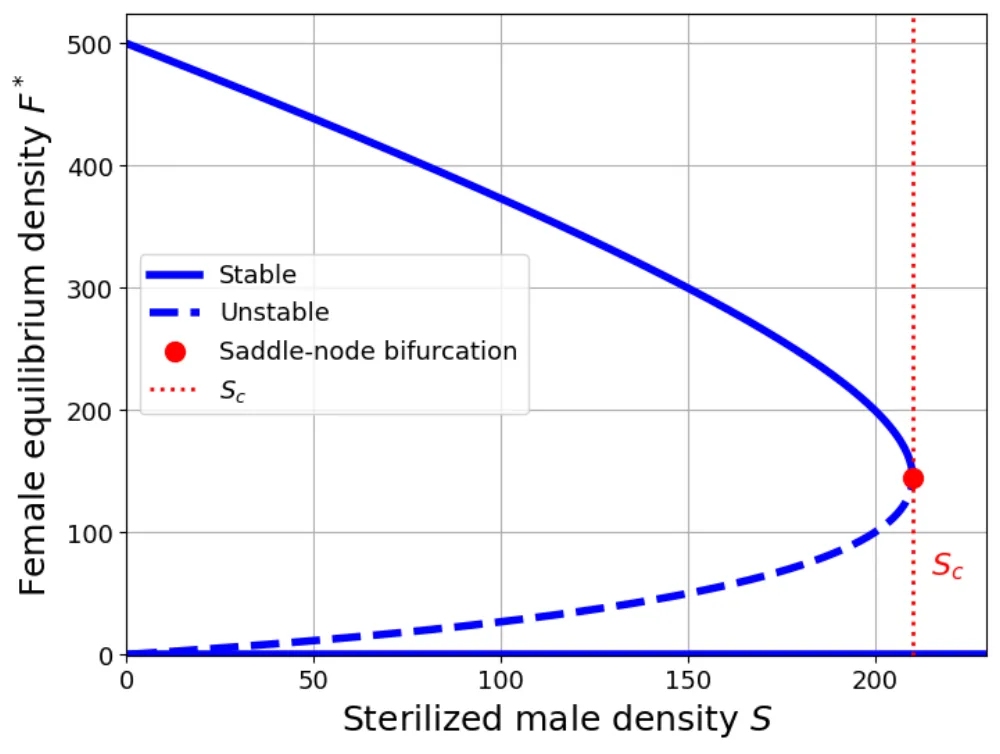
Differential-equation models of the SIT
Average numbers, equations, thresholds: from what release effort is a pest population eliminated, and not merely reduced?
ProjectsThe living lab
Average numbers, equations, thresholds: from what release effort is a pest population eliminated, and not merely reduced?
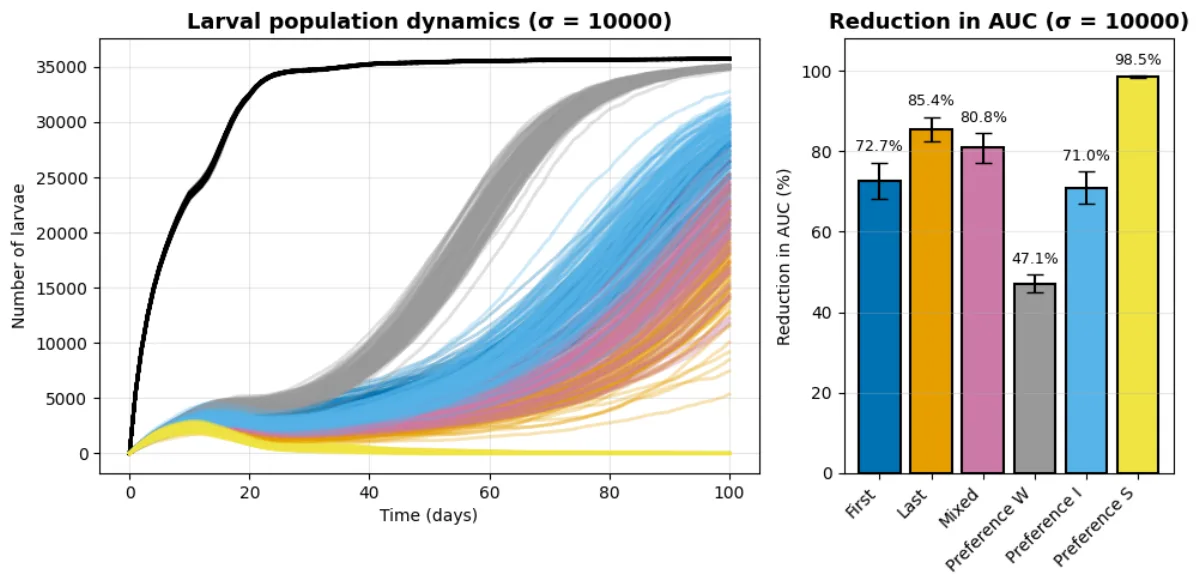
Every female, every mating, every spermatheca: simulating sperm-use biases under sterile male releases.
| Aspect | Differential equations | Individual-based |
|---|---|---|
| What the model follows | Average numbers per compartment: sterile males, females, wild males, larvae | Each insect: lifespan, matings, spermatheca content, egg laying |
| Chance | None: one trajectory per parameter set | Random draws; 100 repetitions per scenario |
| Sperm-use rules | Two: first or last male | Five: first, last, mixed, choice, preference |
| What it yields | Equilibria, stability, elimination thresholds | Distributions of trajectories, reduction of the area under the curve |
| Tools | SciPy, SymPy, python-control | Mesa, NumPy, pandas, seaborn |
| Published code | thesisData (chapters 2 to 5) | sit_remating_abm |
269 functional responses, 45 species: what prey consumption says, and does not say, about invasiveness.
Eleven Jupyter notebooks sorted by chapter: every figure of the thesis can be rebuilt from its code.
Three published models, recomputed in the browser: observe, vary, understand.